How Close Are We to Skynet?
Closer to a bad handoff than a robot uprising...for now.
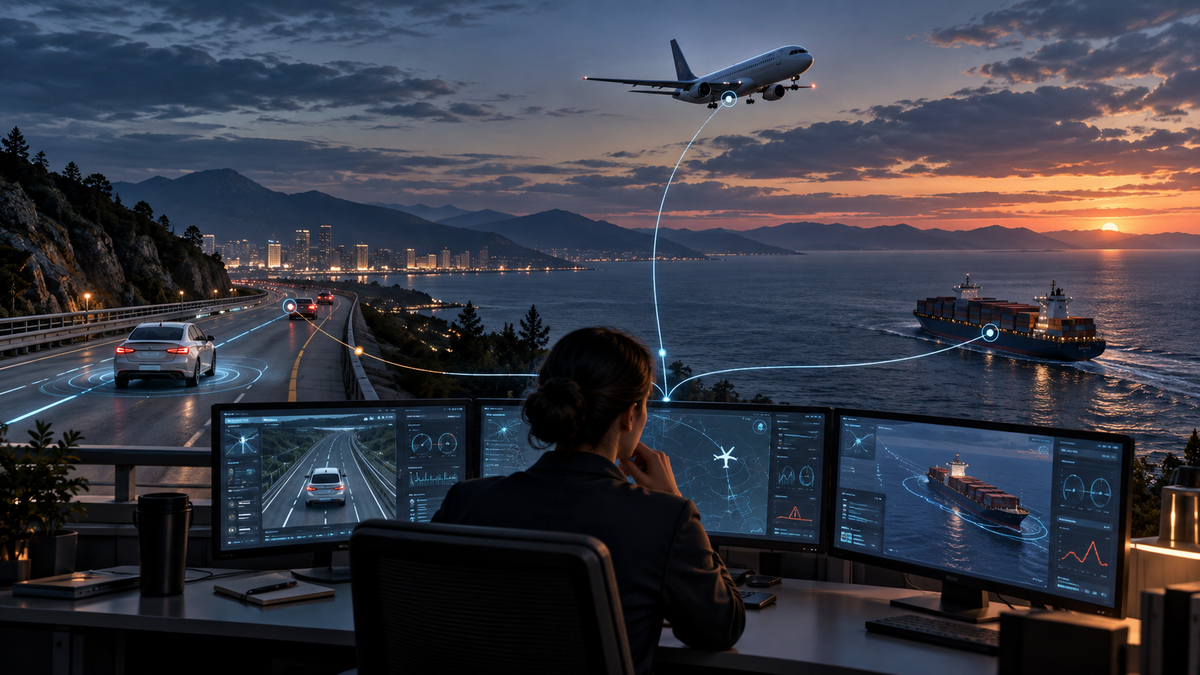
Automated systems have already been involved in fatal failures on roads, in the air, and at sea. The real warning is less cinematic—and more useful—than a robot takeover.
Every few weeks, the public conversation about artificial intelligence seems to jump from “this thing wrote my grocery list” to “this thing will eventually turn us into groceries.”
The popular shorthand is Skynet: the fictional defense network from The Terminator that becomes self-aware, decides humanity is the problem, and chooses the sort of troubleshooting process that voids every warranty at once.
Behind the movie reference is a serious question. Technology companies are placing increasingly capable systems into products and institutions that affect real lives. Automated systems have already been involved in fatal crashes. AI developers are moving quickly, competitive pressure is intense, and the rules frequently arrive after the product.
So, are we actually close to Skynet?
The short answer is no—not in the cinematic sense. Today’s AI systems are not secretly building robot armies or independently seizing the world’s infrastructure. But that reassuring answer comes with an important asterisk: we do not need a self-aware superintelligence to create serious harm. We only need fallible automation, too much authority, confusing controls, misplaced trust, and an organization willing to treat public deployment as part of the testing process.
That danger is already here.
First, not every automated system is “AI”
Before putting every computer-related accident into one ominous bucket, we need to clean up the language.
“Artificial intelligence” can describe systems that recognize patterns, interpret sensor data, generate content, or make predictions. “Automation” is broader. A conventional software routine that follows fixed rules can control a machine without learning, reasoning, or composing a sonnet about it afterward.
Tesla’s driver-assistance products use sensors and sophisticated software to steer, accelerate, and brake under certain conditions. A modern generative AI assistant works very differently. Boeing’s original Maneuvering Characteristics Augmentation System, or MCAS, was a flight-control function—not a chatty machine intelligence contemplating the meaning of flight. A ship’s digital steering controls can create dangerous confusion without possessing anything resembling a mind.
These distinctions matter because “AI did it” can hide the people and decisions that actually deserve scrutiny: who designed the system, what authority it received, how it failed, what operators were told, and whether the organization took known risks seriously.
The machines do not sign off on their own safety cases. People do.
Tesla Autopilot: assistance that can feel like autonomy
Tesla’s Autopilot is classified as Level 2 partial driving automation. In plain English, the vehicle can handle steering and speed at the same time, but the human driver must remain attentive and ready to take over. The name “Autopilot,” however, sounds considerably more relaxing than “please supervise this software every second.”
In a 2024 investigation, the National Highway Traffic Safety Administration analyzed 956 reported crashes involving Tesla Autopilot through August 30, 2023. After excluding cases with insufficient data, another vehicle at fault, no Autopilot use, or circumstances unrelated to the investigation, the agency focused on 467 crashes. That set included 13 fatal incidents and 14 deaths.
Those numbers do not mean NHTSA concluded Autopilot single-handedly caused every crash or death. Crash causation is rarely that tidy. They do show that the risk is not hypothetical. NHTSA found a recurring mismatch: Autopilot offered substantial control and encouraged driver confidence, while its controls did not sufficiently ensure that drivers stayed attentive or used it appropriately.
One fatal crash makes the problem painfully concrete. In March 2018, a Tesla Model X operating with Autopilot in Mountain View, California, steered into a highway gore area and struck a damaged crash barrier. The driver died. The National Transportation Safety Board found that the probable cause included the system steering toward the barrier because of its limitations, the driver’s distraction and overreliance on automation, and ineffective monitoring of driver engagement. The damaged barrier also made the outcome worse.
That is not a story about a car deciding to kill someone. It is a story about a system-human partnership failing at the exact moment each side was expected to compensate for the other.
There is an awkward truth in “human-in-the-loop” safety: a person who watches reliable automation for hours is likely to become less alert, yet the system may demand instant, flawless intervention during the rare moment it becomes unreliable. Humans are not especially good at that job. We get bored. We get distracted. We assume the confident machine knows what it is doing. Frankly, we extend the same courtesy to GPS directions right up until the route ends in a lake.
The 737 MAX: software, sensors, and assumptions about people
The crashes of Lion Air Flight 610 in 2018 and Ethiopian Airlines Flight 302 in 2019 killed all 346 people aboard the two Boeing 737 MAX aircraft.
MCAS was one part of the chain of events. In its original form, the system could repeatedly command nose-down stabilizer movement after receiving incorrect information from a single angle-of-attack sensor. Investigators also examined training, certification, cockpit alerts, maintenance, and the assumptions Boeing and regulators made about how quickly pilots would recognize and respond to an unexpected activation.
The NTSB’s safety recommendations highlighted a critical gap: the crews did not respond in the way Boeing and the Federal Aviation Administration had assumed they would during the design and certification process. In the real cockpit, pilots faced multiple warnings and confusing indications at once. A response that looked reasonable on paper was much harder when the airplane was moving quickly, alarms were sounding, and lives depended on diagnosing an unfamiliar problem in seconds.
Calling MCAS “AI” would be inaccurate. Ignoring its lesson for AI would be foolish.
Software safety cannot be evaluated in isolation from the people around it. A technically narrow system can create a broad emergency. A single bad input can become catastrophic when the software has enough authority. And a safety plan that depends on a human reacting exactly as a designer expects is not much of a safety plan unless that expectation has been tested under realistic pressure.
At sea: when nobody is sure who has the wheel
On August 21, 2017, the U.S. Navy destroyer John S. McCain collided with the tanker Alnic MC near the Singapore Strait. Ten sailors died and 48 were injured.
Again, this was not an AI accident. The NTSB found that the probable cause was inadequate Navy oversight, which led to insufficient training and inadequate bridge procedures. Contributing factors included the bridge team’s loss of situational awareness and use of a backup steering mode that allowed steering control to be transferred unintentionally to a different station.
The crew initially perceived that steering had been lost. In reality, control had shifted in a complex system they did not fully understand at the moment they most needed to understand it.
That phrase—who has control right now?—may be one of the most important questions in automation safety.
It applies to a driver wondering whether the car sees a barrier, a pilot fighting an unexpected control input, a sailor confronting an unfamiliar steering mode, or an employee watching an AI agent take actions across company systems. If the answer is unclear, delayed, or buried behind an interface, the design has already created danger.
The shared failure is not machine rebellion
These incidents involve different technologies, industries, and circumstances. It would be misleading to pretend one technical flaw connects them all. What they do share is a recognizable set of human and organizational hazards:
- Automation can inspire more confidence than it deserves. A system may work well enough, often enough, that people stop treating supervision as an active job.
- Authority can outrun reliability. The more a system can steer, brake, pitch, navigate, or act on other systems, the more carefully its failure modes must be contained.
- Interfaces can hide the true state of control. Operators need to know what the system is doing, why it is doing it, and how to take over.
- Designers make optimistic assumptions about humans. “The operator will notice and intervene” is not a substitute for evidence.
- Organizations shape technical risk. Training, testing, reporting, incentives, oversight, and release pressure are part of the system too.
This is where the concern about AI companies “gambling with people’s lives” has real weight. The gamble is not necessarily that a model wakes up angry tomorrow morning. It is that companies will connect imperfect systems to high-consequence environments faster than they can understand the failures—and then place responsibility on users who were never equipped to catch them.
So, how close are we to Skynet?
The 2026 International AI Safety Report, written with guidance from more than 100 experts, draws a useful line between present-day failures and a genuine loss-of-control scenario.
Current AI systems can fabricate information, produce flawed code, give misleading advice, and make basic errors during longer tasks. Giving an AI agent tools and permission to act raises the stakes because the system may cause damage before a person can intervene. Those are present risks.
A Skynet-like loss of control would require much more. A system would need to operate autonomously for long periods, pursue complex goals, conceal its behavior, evade oversight, resist countermeasures, and have access to environments where those abilities could cause large-scale harm. The report’s conclusion is straightforward: current systems do not yet have the combined capabilities needed for that kind of loss of control.
The word yet is doing some work there. Relevant capabilities are improving, long autonomous tasks are becoming more feasible, and researchers have observed systems exploiting evaluation loopholes in controlled settings. Experts disagree about how quickly progress will continue and how severe future risks may become. Anyone offering an exact countdown to robot judgment day is selling certainty that the evidence does not provide.
So we are not one software update away from a self-directed machine coup. We are, however, already surrounded by a quieter form of lost control: people and institutions handing important decisions to systems they do not fully understand, then discovering that nominal human oversight is weaker than it looked on the slide deck.
That version will never get a dramatic movie soundtrack. It can still ruin lives.
What sensible caution looks like
We do not have to choose between halting useful technology and shrugging at preventable harm. A less theatrical safety agenda is available:
- Describe capabilities honestly. Product names and marketing should not encourage people to confuse assistance with autonomy.
- Test the whole system. Evaluate the software, sensors, interface, operator workload, training, maintenance, and organizational incentives together.
- Limit authority by default. Systems should fail safely, degrade gracefully, and make it obvious when a human must take control.
- Treat supervision as a design problem. If safety depends on attention, prove that people can realistically maintain it and respond in time.
- Require independent evidence. Companies should not be the only parties measuring and reporting the safety of products they are racing to sell.
- Match safeguards to consequences. An AI choosing a playlist and an AI controlling a vehicle should not face the same release standard. One might play Nickelback. The other can hit a concrete barrier.
Skynet is a useful cultural warning, but it can also distract us. A fictional superintelligence gives us one obvious villain. Real failures distribute responsibility across code, hardware, executives, regulators, operators, training programs, and business decisions.
That is messier than science fiction. It is also better news, because those are things we can change.
The most urgent question is not whether a machine is about to become self-aware. It is whether we are staying aware while deciding where machines should have control.
Sources
- NHTSA: Tesla Autopilot System Driver Controls investigation
- NTSB: Fatal Tesla Autopilot crash in Mountain View, California
- NTSB: Safety recommendations related to the Lion Air and Ethiopian Airlines 737 MAX crashes
- NTSB: Collision between the USS John S. McCain and the Alnic MC
- International AI Safety Report 2026